
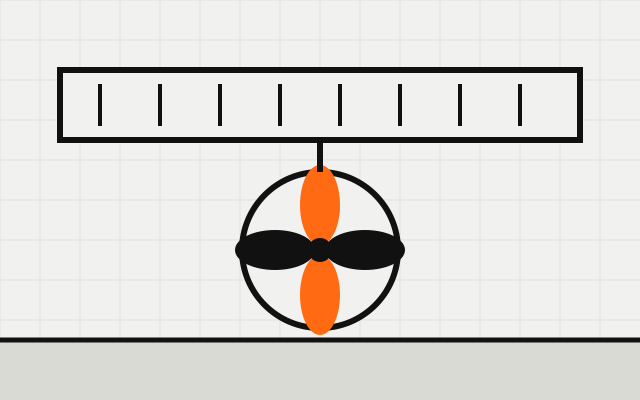
Equipment you cannot reach does not get serviced. Access for maintenance has to be planned during installation, not after it, because fixing it once the building is finished is much harder.
At a glance
- Leave enough room around equipment to open it, replace parts and inspect it.
- Place isolation valves and measuring points within reach.
- Provide access panels for equipment behind ceilings and walls.
Enough space around equipment
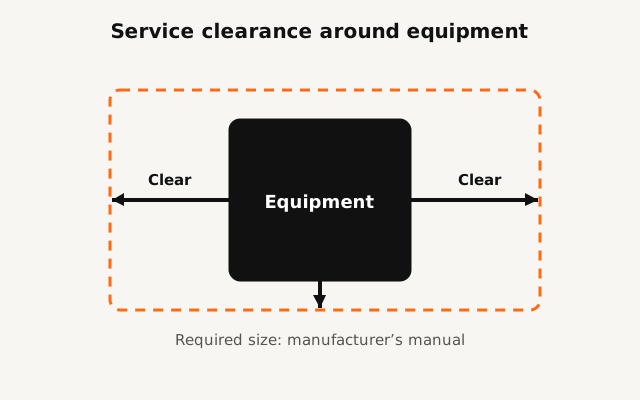
The manufacturer’s manual gives the required size. The space has to stay truly clear, with no shelving, ducts or cables placed in it later.
- Allow an exit route for heavy parts that need replacing.
- Check the height and width of the plant-room door.
- Provide lighting and a service power point on site.
Valves, measuring points and access panels
| Element | Why it matters |
|---|---|
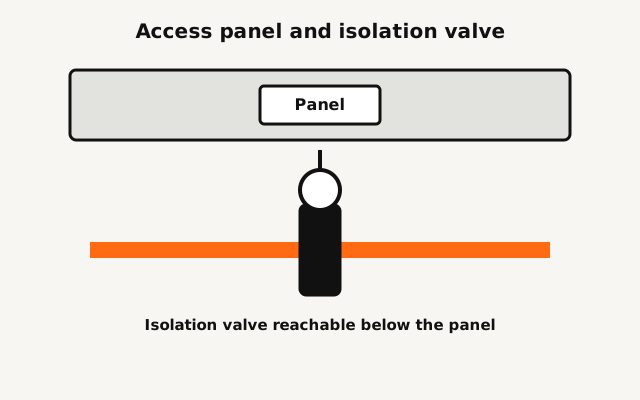
| Isolation valve | Repair one section without shutting the whole network |
| Measuring point | Check pressure and temperature when diagnosing faults |
| Access panel | Reach a joint or equipment behind ceilings and walls |
| Pipe label | Quick identification of fluid and flow direction |
Documents and operator feedback
Labelling equipment and routes and keeping drawings current makes maintenance faster. Ask the maintenance team before the layout is final; it is the simplest way to find access problems. The US Department of Energy’s maintenance guide also treats maintenance-friendly design as part of efficient operation.
In facilities where day-to-day operation matters, such as banking premises, suitable access for equipment maintenance is a key consideration in installation.
Frequently asked questions
Who decides access requirements?
The designer and contractor, using the manufacturer’s manual and the operator’s input; ideally settled in the coordination meeting before installation.
What if access has already been built inadequately?
With supervisor approval you can add panels, relocate valves or correct the route; the sooner, the cheaper.
Conclusion
To review access and maintainability of your project’s facility systems, get in touch. Contact us
Related service: Heating and cooling systems
Further reading: US DOE FEMP, Operations & Maintenance Best Practices Guide